
How to Select a Centrifugal Fan?
How to Select a Centrifugal Fan?
Feb 28, 2026
How to Select a Centrifugal Fan?
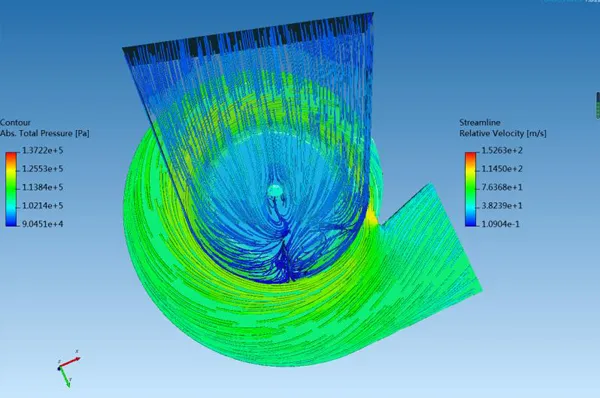
Step 1: Define the operating requirements, including the required airflow, air pressure, medium temperature, and medium composition (whether it contains dust, corrosive substances, or is flammable or explosive).
Step 2: Select the fan type. Based on the airflow and air pressure relationship, choose an axial flow fan or a forward-curved centrifugal fan for low-pressure, high-volume applications; choose a backward-curved centrifugal fan for high-pressure, medium-volume applications; and choose a mixed-flow or oblique-flow fan for special operating conditions.
Step 3: Determine the material and explosion-proof/corrosion-resistant rating. Choose stainless steel for corrosive environments, heat-resistant materials for high-temperature environments, and explosion-proof fans for flammable and explosive environments. Determine the explosion-proof rating according to standards.
Step 4: Match the motor power. Calculate the shaft power based on the airflow and air pressure, allowing for a safety factor of 1.1-1.3 times. Select a Class 1 energy-efficient motor for energy saving and durability.
Step 5: Confirm additional requirements, such as the outlet direction, whether noise reduction is needed, and whether variable frequency control is required, to ensure the fan is suitable for actual usage needs. Selection principles: Prioritize larger over smaller (but not blindly choose the largest), adapt to operating conditions, prioritize quality, and ensure energy efficiency; avoid focusing solely on price while ignoring performance.
Following this selection process will largely prevent you from making mistakes and ensure you choose a suitable and effective fan.
Recent Posts

October 26, 2016
The Most Successful Engineering Contractor
Aug 25, 2026
How to Extend the Life of Centrifugal Fan Bearings?


Jul 30, 2026
How SIMO BLOWER Controls Dynamic Balancing Quality?
Contact US
Product Information
Quantity
Unit
Piece
Support order samples, customization, wholesale direct, and complete payment. If the product you look for does not have corresponding customized content, pls fill out the form below to contact us, and we will reply ASAP.