
ID Fan Replacement for SCR Retrofit at a Waste-to-Energy Plant
ID Fan Replacement for SCR Retrofit at a Waste-to-Energy Plant
Oct 30, 2026
Project Background: Increased System Resistance Following SCR Installation
To comply with more stringent emission standards, a waste-to-energy plant incorporated an SCR (Selective Catalytic Reduction) system as part of an upgrade to its flue gas treatment process.
The addition of the SCR equipment altered the resistance characteristics of the flue gas system. Consequently, the operating conditions of the existing induced draft fan had to be re-evaluated to ensure it could meet the operational requirements of the upgraded system.
Rather than selecting a replacement fan based solely on the original equipment parameters, this project sought a solution specifically tailored to the requirements of the modified flue gas system.
Fan Requirements for the Upgraded Flue Gas System
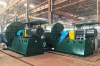
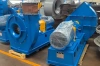
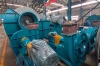
SIMO Blower provided a customized centrifugal induced draft fan for the flue gas upgrade project of Boiler No. 4.
The primary operating parameters are as follows:
| Parameter | Specification |
|---|---|
| Fan type | Induced Draft (ID) Fan |
| Fan model | 3400DWB21F |
| Airflow | 189,588 m³/h |
| Static pressure | 15,588 Pa |
| Operating temperature | 150°C |
| Impeller diameter | 3,400 mm |
| Main motor power | 2,240 kW |
This fan has been configured to meet the "high air volume, high pressure" requirements specified for the flue gas treatment process in this project. Its mechanical structure and auxiliary components—including bearings, temperature monitoring devices, and vibration monitoring equipment—have all been selected in accordance with the project's specific needs.
Key Engineering Consideration: Recalculating Fan Operating Points Following SCR Retrofitting
An SCR (Selective Catalytic Reduction) retrofit involves more than just the addition of emission control equipment; it also alters the pressure loss characteristics of the flue gas treatment system.
The SCR reactor, catalyst layers, connecting ductwork, and other components can introduce additional flow resistance. The actual pressure loss depends on the specific system design and operating conditions.
If the existing induced draft (ID) fan cannot accommodate the resistance of the modified system, the power plant may encounter issues such as insufficient airflow, operational instability, or the fan operating outside its design envelope.
Therefore, when implementing an SCR retrofit, the selection of an ID fan must account for the entire upgraded flue gas system, including:
● Required flue gas volumetric flow rate post-retrofit
● Total system resistance and fan pressure requirements
● Operating temperatures and flue gas characteristics
● Pressure losses across ductwork and SCR equipment
● Motor power and operating conditions
● Fan construction, materials, and monitoring requirements
The critical step is to determine the required fan operating point based on the upgraded system, rather than simply relying on the nameplate specifications of the existing fan.

Recent Posts



Contact US
Product Information
Quantity
Unit
Piece
Support order samples, customization, wholesale direct, and complete payment. If the product you look for does not have corresponding customized content, pls fill out the form below to contact us, and we will reply ASAP.